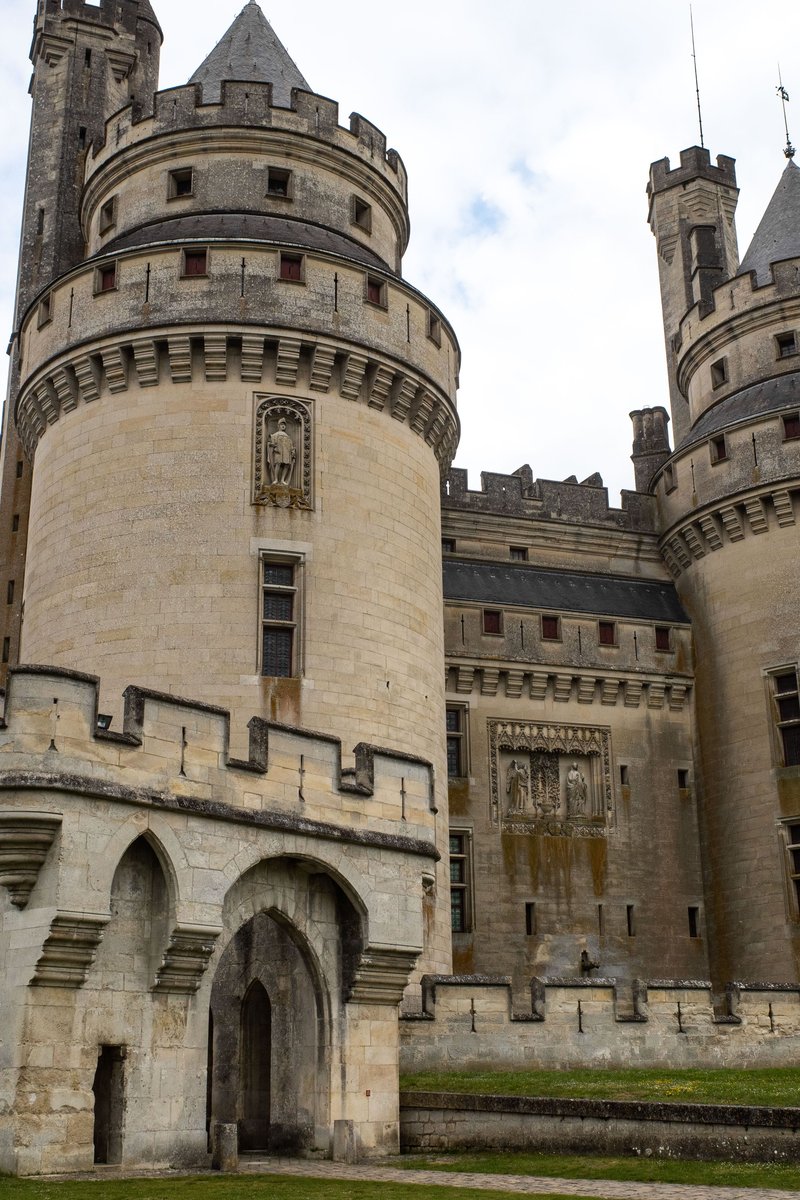
The Château de Pierrefonds rising above the village — soaring round towers, machicolated ramparts and steep conical roofs catching the light against the Forest of Compiègne. Pierrefonds, Oise, France.

The medieval castle that never quite existed — and became Camelot

Château de Pierrefonds skip-the-line — the fairy-tale fortress that Viollet-le-Duc reimagined for Napoleon III, an idealised medieval castle 'in a complete form which might never have existed', and the Camelot of the BBC's Merlin. Open self-paced ticket: arrive any time during opening hours and walk straight in past the queue.

See ticket options
  • 1393–1407 Original castle built for Louis I, Duke of Orléans
  • 1857 Napoleon III commissions Viollet-le-Duc to rebuild the ruin
  • 2008–2012 Camelot in the BBC's Merlin — also filmed The Man in the Iron Mask
  • 1862 Listed monument historique — a Romantic neo-Gothic masterpiece

Choose your ticket

Adult ticket

Full castle — towers, ramparts and the restored state interiors, on an open self-paced ticket

€21

  • Skip-the-line castle entry — arrive any time during opening hours, no fixed time slot
  • The keep, the double curtain wall and the rampart walk between the towers
  • Viollet-le-Duc's reimagined state rooms and sculpted interiors, subject to the day's opening
  • The courtyard, the chapel and the celebrated Merlin / Camelot filming setting
  • 5-minute audio history sent before your visit
Reserve adult ticket
  • Book in your languageYour currency, final price.
  • Pro tips includedBest times, secret spots, the room most miss.
  • Ready before you flyMobile ticket, ready in your inbox.
  • 24/7 human supportReal people, instant answers — any hour, any time zone.
4.8 from 64 verified travellers
Hannah R.
Manchester
“It looks like a castle a child would draw — almost too perfect to be real. Standing in the courtyard where they filmed Camelot was the highlight of the whole trip for us.”
Thomas B.
Amsterdam
“We booked ahead and walked straight in past the queue. Fascinating to learn how much of it is Viollet-le-Duc's 19th-century imagination rather than the real medieval castle — it doesn't make it any less magnificent.”
Camille D.
Brussels
“Came as Merlin fans and left as history fans. The towers and the ramparts are extraordinary, and the village below with the lake makes the perfect photo.”

5-minute audio guide

Your Pierrefonds 5-minute guide

Hand-written, narrated by a heritage host, sent to every customer the day before their visit. Five minutes that turns the fairy-tale photo into a real story — the medieval fortress, the emperor and the architect who dreamed it into perfection, and the castle that became Camelot.

Included with your booking — your full guide arrives with your ticket.Get your guide
  • How a ruined medieval fortress became the most perfect castle in France
  • Viollet-le-Duc, Napoleon III and a castle 'in a complete form which might never have existed'
  • The towers, ramparts and sculpted halls — what to look for inside
  • Why this is Camelot: Pierrefonds on screen, from Merlin to The Man in the Iron Mask

Included free with every ticket. No app, no download — plays in any browser.

About Château de Pierrefonds

Château de Pierrefonds is the great romantic dream among French castles: a fortress that looks more medieval than the Middle Ages ever managed. A castle has stood on this rocky spur above the village of Pierrefonds, on the edge of the Forest of Compiègne north-east of Paris, since the 12th century; the grand fortified château we see was raised between 1393 and 1407 for Louis I, Duke of Orléans, brother of the king. Dismantled in the 17th century and left a picturesque ruin for two hundred years, it might have crumbled away entirely — had it not caught the imagination of an emperor.

In 1857 Napoleon III commissioned the architect Eugène Viollet-le-Duc — the most famous restorer of his age, the man who reworked Notre-Dame and Carcassonne — to bring Pierrefonds back to life. From 1861 the project became something far bolder than a restoration. Viollet-le-Duc did not faithfully rebuild what had been; he reimagined an idealised medieval castle, in his own words 'in a complete form which might never have existed', complete with soaring towers, machicolated ramparts, painted halls and a riot of carved stone. The result is a masterpiece of 19th-century Romantic and neo-Gothic invention — a building that tells you as much about how the 1800s dreamed the Middle Ages as about the Middle Ages themselves.

That theatrical, perfect-castle silhouette has made Pierrefonds one of Europe's most filmed fortresses. It stood in for Camelot throughout the BBC's Merlin from 2008 to 2012, appeared as the backdrop to the 1998 The Man in the Iron Mask, and has featured in Versailles and many other productions. It is a listed monument historique, not a UNESCO site, and it is managed by the French state. Entry is by open, self-paced ticket: there is no fixed time slot, so with a skip-the-line ticket you simply arrive any time during opening hours, walk straight in past the queue and step into the castle that fantasy made real.
Practical information

Opening hours
Open daily except 1 January, 1 May and 25 December. 5 September to 30 April 10:00–17:30; 2 May to 4 September 09:30–18:00. Last entry is one hour before closing, and the surrounding park closes about 45 minutes before the castle.
Address
Château de Pierrefonds, Rue Viollet-le-Duc, 60350 Pierrefonds, Oise, France
Getting there from Paris
Roughly 1 hour 15 minutes by car — take the A1 autoroute to exit 9 and follow signs via Compiègne to Pierrefonds. By public transport, take a train from Paris Gare du Nord to Compiègne (about 50 minutes), then a local bus or taxi for the final 15 km to Pierrefonds.
Getting there from Compiègne
Pierrefonds is about 15 km south-east of Compiègne. A seasonal local bus and taxis cover the route; by car it is around 20 minutes through the Forest of Compiègne.
Time needed
Allow about 1.5 to 2 hours for the towers, the rampart walk and the state interiors. Add time to wander the village and the lakeside below the castle, which frame the classic view.
Accessibility
As a hilltop medieval castle with spiral stairs, towers and uneven historic floors, parts of Pierrefonds involve steps and are not fully step-free. The courtyard and some ground-floor halls are more accessible than the towers and ramparts. Contact us before booking if mobility is a concern and we will confirm the current accessible route and any assistance available.
Photography
Permitted in the castle without flash or tripod. The signature shots are the full castle from the lakeside in the village below, the inner courtyard, and the sculpted figures along the staircases and halls.
Food
Cafés, crêperies and restaurants line the village square at the foot of the castle, a short walk from the gate, and the lakeside and forest offer good picnic spots.

About our service

Château de Pierrefonds Tickets acts as a facilitator to help international visitors purchase skip-the-line, open self-paced tickets for the Château de Pierrefonds, which is owned and managed by the French state. We do not resell tickets — we provide a personalised booking and English-language support service, and our concierge service fee is included in the displayed price. For those who prefer to purchase directly, the official ticket site is chateau-pierrefonds.fr.

Frequently asked

What's included in the skip-the-line ticket?

Priority entry past the ticket-office queue on your chosen date, plus access to the castle — the keep, the double curtain wall, the rampart walk between the towers, the inner courtyard and the restored state rooms and sculpted interiors, subject to the day's opening. The ticket is valid all that day, so arrive any time during opening hours. The 5-minute audio history is sent free before your visit.

Is the ticket for a specific date and time?

Dated, not timed. You choose your visit date and the ticket is valid all that day — there's no fixed time slot, so you can arrive any time during opening hours. Just tell us your preferred date when you book and we issue the ticket so you walk straight in past the queue, with no scramble for availability at the gate.

Why does the castle look more medieval than a real medieval castle?

Because much of what you see is a 19th-century reimagining. The architect Eugène Viollet-le-Duc, working for Napoleon III from 1857, did not faithfully restore the ruin — he recreated an idealised medieval castle 'in a complete form which might never have existed', with soaring towers, painted halls and elaborate carving. It is a masterpiece of Romantic, neo-Gothic invention as much as a medieval fortress.

Is this the castle from the BBC series Merlin?

Yes. Château de Pierrefonds stood in for Camelot throughout the BBC's Merlin from 2008 to 2012, and its fairy-tale silhouette is instantly recognisable to fans. It has also appeared in the 1998 film The Man in the Iron Mask, in Versailles and in many other productions, which is part of why so many visitors make the trip.

Who built Château de Pierrefonds?

The grand fortified château was raised between 1393 and 1407 for Louis I, Duke of Orléans, brother of the French king, on the site of an earlier 12th-century castle. After it was dismantled and left a ruin, Napoleon III commissioned Eugène Viollet-le-Duc to rebuild and reimagine it from 1857, giving the castle its present, fantastical form.

How long does a visit take?

Allow about 1.5 to 2 hours for the towers, the rampart walk between them, the inner courtyard and the restored state interiors. Add extra time to wander the village square and the lakeside below the castle, which frame the classic photograph and make a pleasant pause before or after.

What are the opening hours?

From 5 September to 30 April the castle is open 10:00–17:30; from 2 May to 4 September it is open 09:30–18:00. Last entry is one hour before closing, and the park closes about 45 minutes before the castle. It is closed on 1 January, 1 May and 25 December.

Can I see the Empress's Apartments?

The Empress's Apartments are reopening to visitors from 5 May 2026 after restoration. Opening of individual rooms can change with conservation work, so we'd suggest treating any one interior as subject to the day's programme; tell us if a specific room is the reason for your visit and we'll confirm the current situation before you book.

Can I show the ticket on my phone?

Yes. We issue an e-ticket that you present on your phone at the entrance — there is no need to print it. Just have it ready to show on your chosen date, and our concierge team is on call if anything needs sorting on the day.

How do I get to Pierrefonds from Paris?

By car it is about 1 hour 15 minutes — take the A1 autoroute to exit 9 and follow signs via Compiègne to Pierrefonds. By public transport, take a train from Paris Gare du Nord to Compiègne (about 50 minutes), then a local bus or taxi for the final 15 km. A car is the easiest option, as the final leg has limited public transport.

Is there parking at the castle?

Yes — there is parking in the village at the foot of the castle, a short walk uphill to the gate. Spaces near the centre can fill on busy weekends and in the Merlin-fan high season, so arriving early in the day or outside peak hours makes parking easier.

Is the castle wheelchair accessible?

Partly. As a hilltop medieval castle with spiral stairs, towers and uneven historic floors, parts of Pierrefonds involve steps and are not fully step-free; the courtyard and some ground-floor halls are more accessible than the towers and ramparts. Contact us before booking if mobility is a concern and we will confirm the current accessible route and any assistance available.

Can I take photographs inside?

Yes — photography is permitted in the castle without flash or a tripod. The inner courtyard and the carved figures along the staircases and halls photograph beautifully; outside, the full castle seen from the lakeside in the village below is the signature shot.

Is Pierrefonds a UNESCO World Heritage Site?

No. Château de Pierrefonds is not a UNESCO World Heritage Site; it has been a listed monument historique since 1862. It is celebrated instead as one of the finest examples of 19th-century Romantic and neo-Gothic restoration, the work of Eugène Viollet-le-Duc for Napoleon III.

Can I combine the castle with the Forest of Compiègne?

Easily. Pierrefonds sits on the edge of the great Forest of Compiègne, and the village, its lake and the surrounding woodland walks make a natural addition to the castle visit. The nearby town of Compiègne, with its imperial palace, is about 20 minutes away by road and pairs well for a fuller day out.

What's the difference between Pierrefonds and a real medieval castle?

Pierrefonds began as a genuine medieval fortress of 1393–1407, but most of what visitors see today is Viollet-le-Duc's 19th-century reconstruction and reinvention for Napoleon III. Rather than a faithful restoration, he created an idealised, 'complete' medieval castle that the original may never have resembled — which is exactly what gives Pierrefonds its storybook perfection and its fame as a film location.

What is the Château de Pierrefonds?

The Château de Pierrefonds is a large château in the commune of Pierrefonds, in the Oise département of Hauts-de-France, on the south-eastern edge of the Forest of Compiègne, north-east of Paris. A medieval castle stood here from the 12th century, and the grand fortified version was built between 1393 and 1407 for Louis I, Duke of Orléans. Dismantled in the 17th century and left a ruin, it was rebuilt and dramatically reimagined from 1857 by the architect Eugène Viollet-le-Duc on the orders of Emperor Napoleon III, who made it an imperial residence. Rather than restoring the castle exactly, Viollet-le-Duc created an idealised medieval fortress 'in a complete form which might never have existed', and the result is regarded as a masterpiece of 19th-century Romantic and neo-Gothic architecture. A listed monument historique since 1862, the castle is one of Europe's most filmed, best known as Camelot in the BBC's Merlin.

How do I get to Pierrefonds from Paris by car?

By car, Pierrefonds is roughly 1 hour 15 minutes from Paris. Take the A1 autoroute north and leave at exit 9, then follow the signs via Compiègne and through the Forest of Compiègne to the village of Pierrefonds, where the castle rises above the houses. There is parking in the village at the foot of the castle, a short walk uphill to the gate; spaces near the centre fill on busy weekends, so arriving early in the day helps. Your ticket is valid all your chosen day with no fixed time slot, so simply leave a comfortable margin for the drive and parking and you'll walk straight in past the queue whenever you arrive. The route through the forest is itself part of the appeal, and the lakeside village makes a fine place to pause for lunch before or after the visit.